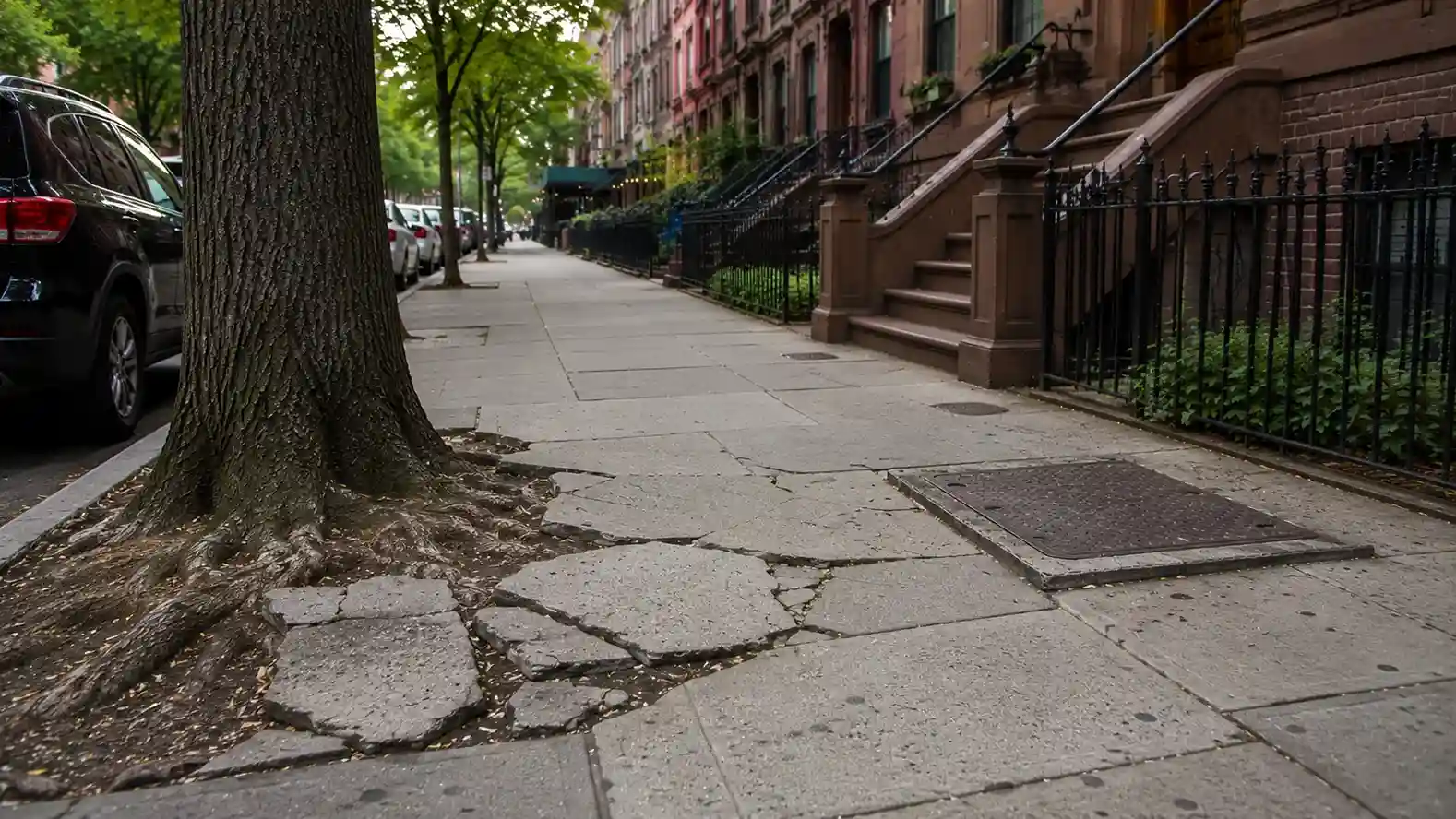
Most New Yorkers don't think twice about the concrete slabs outside their building until a DOT inspector shows up with a violation notice and a repair bill that's suddenly your problem to solve. Here's the part that catches a lot of property owners off guard: the sidewalk in front of your home or building isn't the city's responsibility to fix. It's yours. New York City Administrative Code § 19-152 lays out exactly what a violation looks like, and there are nine ways your sidewalk can end up on DOT's radar.
The good news is that none of these defects are mysterious once you know what to look for. Below, we're breaking down what inspectors are actually looking for and showing you what each defect looks like so you can walk outside, take a look at your own sidewalk, and know whether you're dealing with a minor cosmetic issue or something that needs a licensed contractor sooner rather than later.
The Legal Backbone: Two Codes Every Owner Should Know
The city isn't just picking on your sidewalk at random. Every single defect that gets flagged ties back to an actual legal standard, and once you know what those standards are, the whole system starts to make a lot more sense.
Two sections of the NYC Administrative Code are doing most of the work here.
19-152 is the one that spells out what actually counts as a "substantial defect," and it's also the section that puts the repair job squarely in the property owner's court. Then there's § 7-210, which handles what happens if someone gets hurt because that sidewalk was never fixed. Spoiler: that responsibility lands on the owner too.
Put those two together and the message from the city is pretty hard to miss. DOT shows up and inspects. You're the one who pays for the fix. And if someone trips before you get around to it, you're the one who could end up in court over it.
The Substantial Defects Under § 19-152
A substantial defect is any condition on your sidewalk that DOT has classified as dangerous enough to require repair. Below are the nine categories the city considers unsafe and hazardous enough to flag.
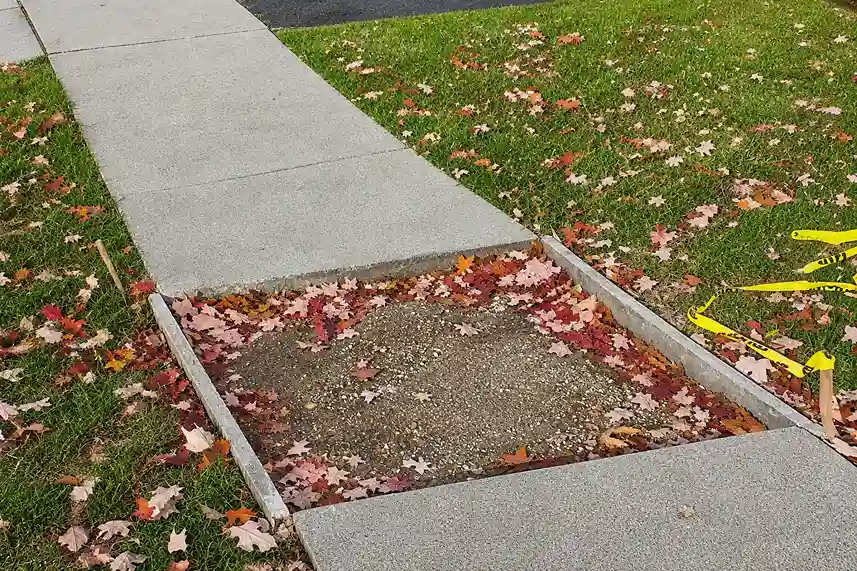
Missing Sidewalk Flag
Picture walking up to a building and finding a patch of dirt or gravel where a slab of concrete should be. That's a missing flag, and it's about as clear-cut as violations get. Either the sidewalk was never built there, or a section has crumbled away entirely.
Sidewalk Crack
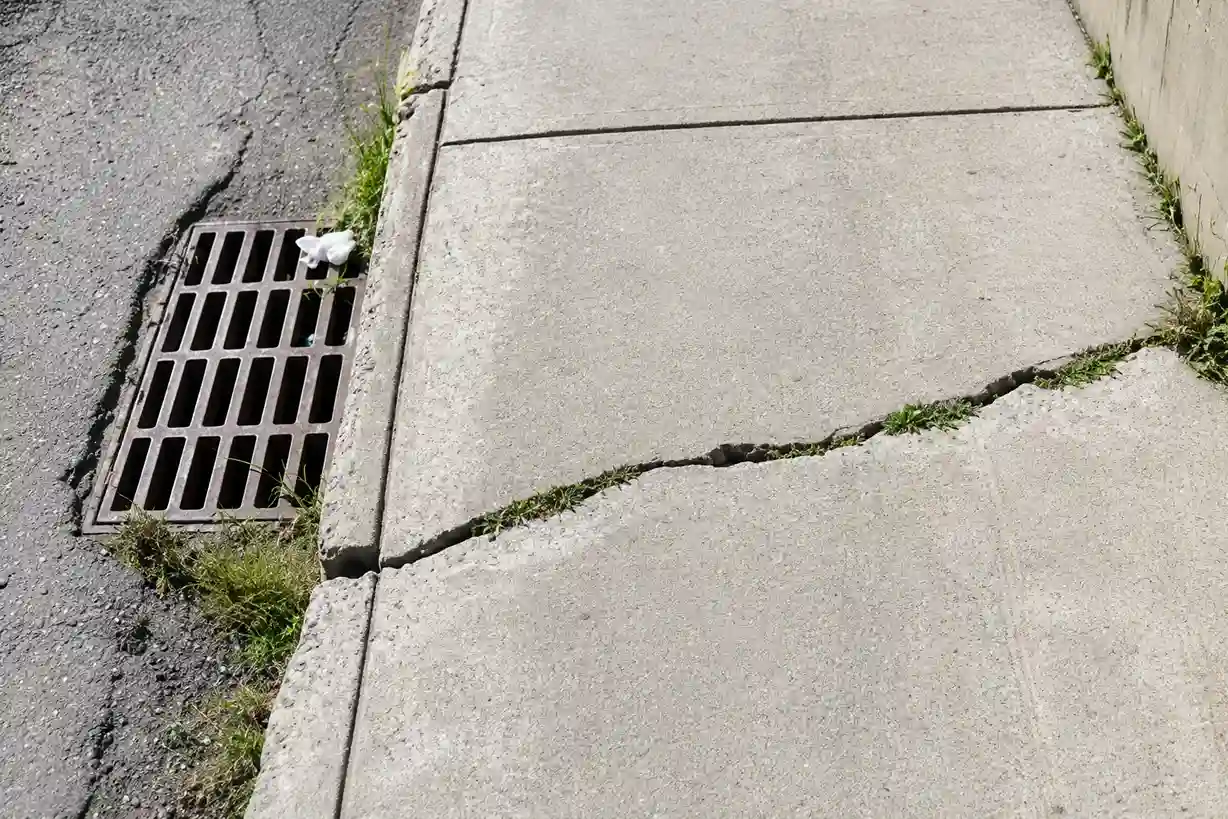
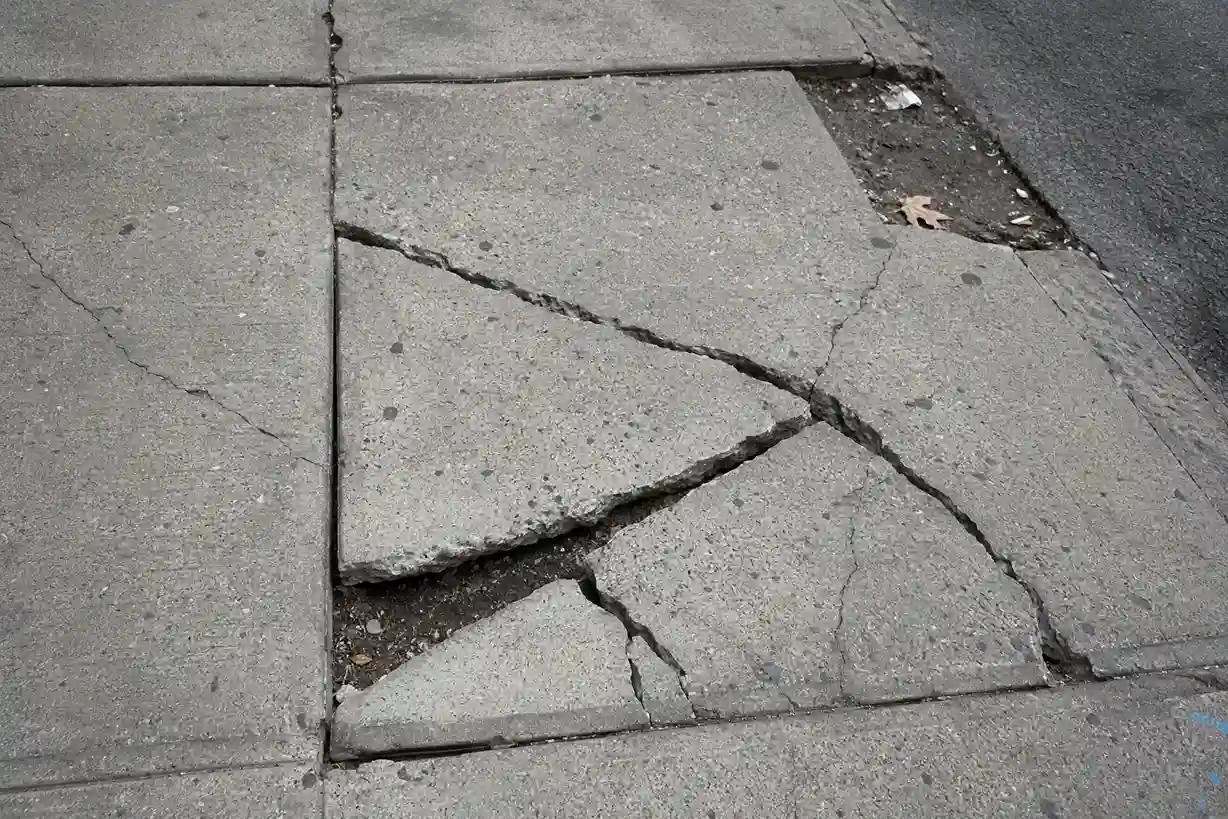
Not every crack is a violation. A hairline crack that isn't going anywhere usually gets a pass. What DOT is actually looking for is a crack severe enough that a piece of the flag could be pried up or knocked loose by hand. If your sidewalk looks like a jigsaw puzzle that's starting to come apart, that's your cue.
Loose Sidewalk Flag
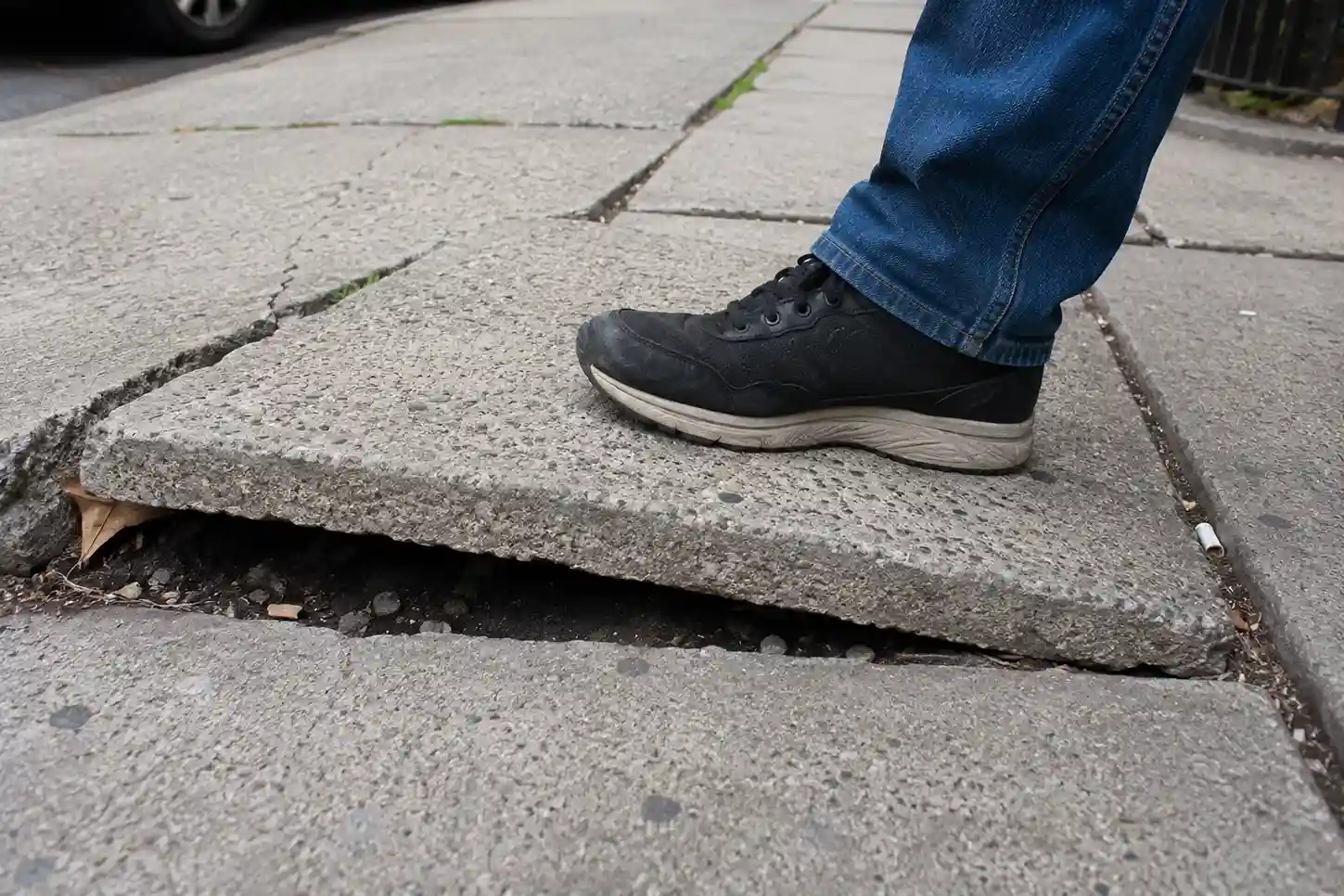
Ever step on a sidewalk flag and feel it wobble like a seesaw? That's exactly what this violation covers. It usually means the ground underneath has eroded away, leaving a hollow void beneath the concrete. A quick way to check your own sidewalk is to walk the corners of each flag and see if anything shifts under your weight.
Vertical Grade Differential (the classic trip hazard)
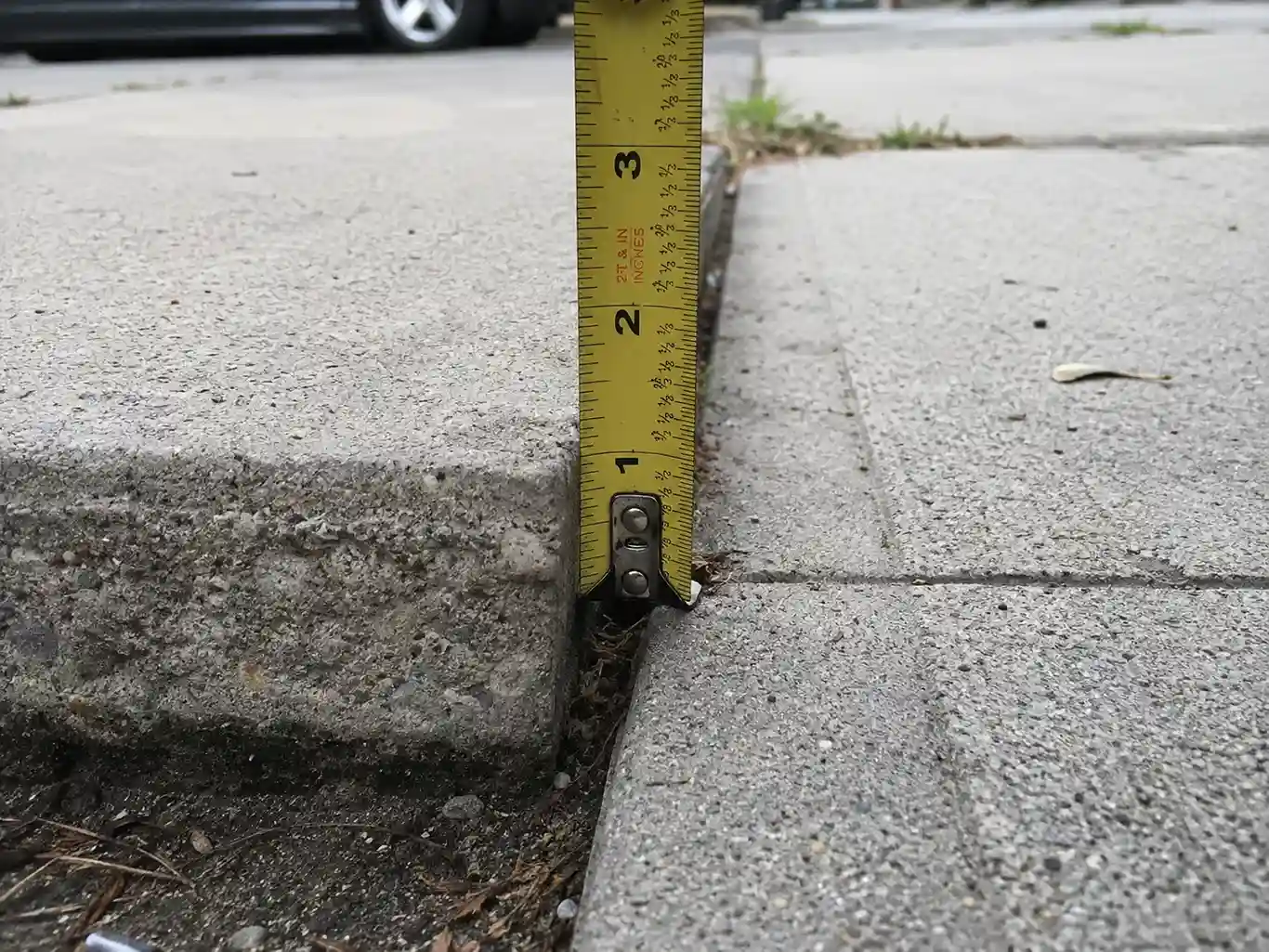
This is the one most people picture when they hear "uneven sidewalk." If two flags sitting side by side are off by even half an inch, that's enough to catch a toe and send someone sprawling. It's also the leading cause of sidewalk-related injury claims in the city, so it's worth taking seriously even when the height difference looks small.
Improper Slope
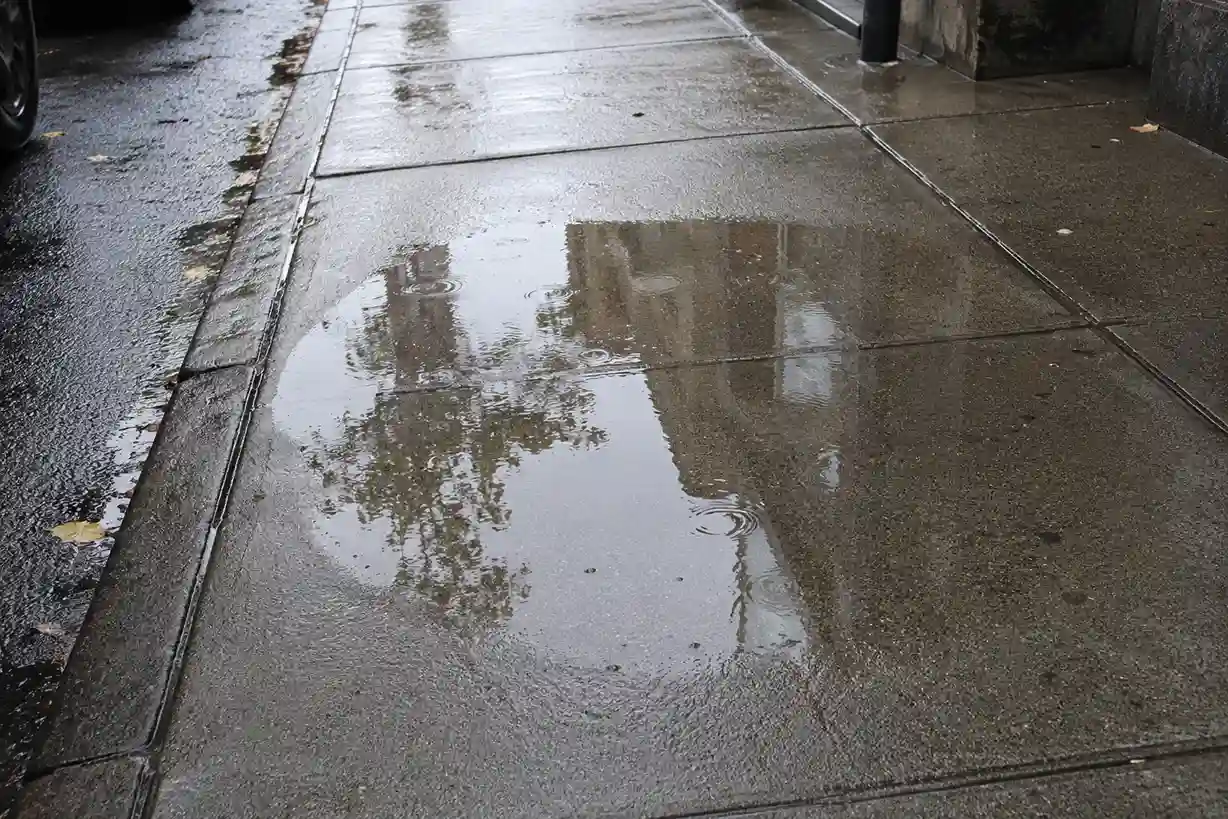
Sidewalks are supposed to shed water toward the curb, not hold onto it. If you're noticing puddles that stick around long after a rainstorm has passed or a flag that seems to tilt the wrong way, you're looking at an improper slope violation. It's one of the easier defects to catch just by watching your sidewalk after it rains.
Hardware Defect
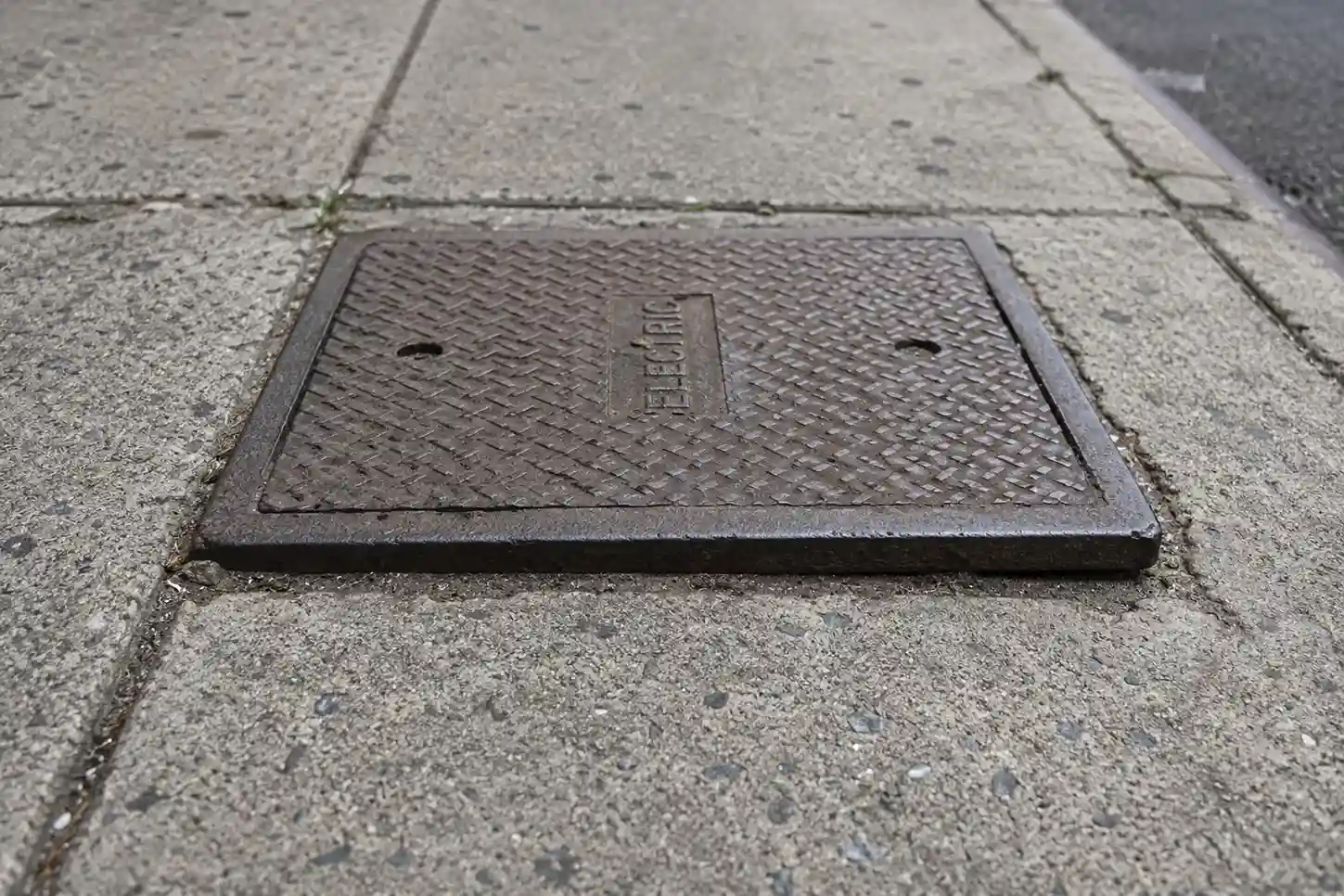
This one covers the metal fixtures embedded in your sidewalk: utility covers, gratings, access hatches, and cellar doors. If any of these sit more than half an inch above or below the surrounding concrete, or if a cellar door flexes more than an inch when someone walks over it, that's a violation. Under RCNY Title 34, § 2-07, whoever owns that hardware is also responsible for the 12 inches of sidewalk surrounding it.
Structural Integrity
This defect is a little more technical than the others. It applies when a flag shares a joint (not an expansion joint) with another already-defective flag, and a crack runs through both connection points. Most owners won't spot this one on their own; it tends to surface during a formal DOT inspection.
Non-Compliance with DOT Specifications
Sometimes a sidewalk looks perfectly fine but still fails to meet DOT's official standards for materials, depth, or installation. This usually traces back to a repair that skipped the permit process or was handled by someone who wasn't licensed for the work.
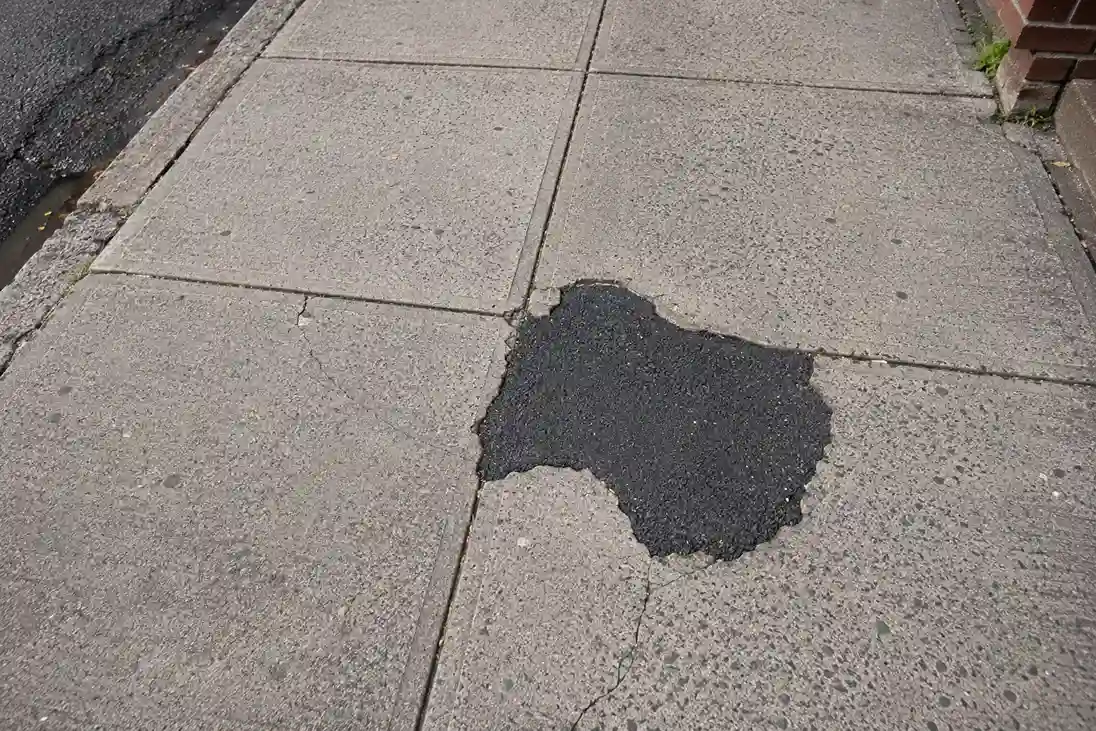
Patchwork
If you've ever seen a pothole-style break in a sidewalk filled in with a quick asphalt patch instead of a proper concrete pour, you've seen this violation in action. DOT wants full-depth concrete repairs, not shortcuts. There's one carve-out here: patchwork installed around canopy poles, parking meters, light poles, signs, or bus shelters gets a pass, unless it also happens to meet one of the other eight defect definitions.
When Tree Roots Are the Real Culprit
Tree wells don't have their own violation code, but they're behind a lot of the cracking and unevenness that falls under the categories above. And because city trees are involved, you can't just handle it yourself. Root-cutting and shaving are against the law, full stop. Instead, owners need to pull a Tree Work Permit from NYC Parks before any work happens near the roots and can request a sidewalk design consultation through their borough's Forestry Office if the situation calls for it.
Who Actually Pays When Someone Gets Hurt
This is where § 7-210 comes back into the picture. If someone trips on your sidewalk and gets injured, the city isn't the one who typically ends up liable, you are. That's true whether your property is commercial, mixed-use, or a residential building that isn't owner-occupied. The only owners who get some breathing room here are those living in their own one-, two-, or three-family home.
What Happens If You Ignore a Violation
Once DOT issues a violation, the clock starts running. Property owners are expected to make the repair within the window given on the notice. Letting it sit doesn't make the problem go away; it just means the city can eventually step in, complete the repair itself, and send you a bill that's almost always steeper than what a contractor would have charged in the first place.
Conclusion
Every single defect on this list can be caught early with a short walk around your building's frontage. Look for wobbly flags, gaps at the joints, puddles after rain, and any height difference you can feel through your shoes. Catching these issues before DOT does is the difference between a straightforward repair and a violation notice that turns into a much bigger headache.
If anything on this list sounds familiar when you look at your own sidewalk, it's worth having a licensed contractor like QuickFix Sidewalk NYC take a closer look before it becomes the city's problem to point out.