Licensed and insured sidewalk contractors with 30+ years of experience, a 4.9-star rating, and 6300+ completed projects across NYC. Whether you need trip hazard removal for a single raised flag or a full uneven sidewalk repair across your entire frontage, our crews grind, level, and repair raised slabs, sunken sections, cracked concrete, and loose hardware to eliminate liability. DOT permits and inspections are handled from start to finish.
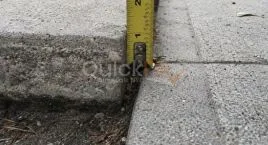
A trip hazard is any raised edge, gap, or broken surface on a sidewalk that can catch a pedestrian's foot and cause a fall. NYC's Department of Transportation treats a vertical height difference of half an inch or more between two adjacent sidewalk flags as a substantial defect, and it's one of the most common reasons property owners get cited or sued. Effective trip hazard mitigation starts with identifying every defect on your frontage, not just the one you noticed, so here's what our concrete trip hazard repair crews fix on a typical job:
Slabs pushed up or knocked out of alignment by tree roots, settling, or age are ground down or replaced through our uneven concrete sidewalk repair process to sit flush and level again.
Sidewalk panels that have sunk below grade are releveled or repoured so water doesn't pool and pedestrians don't catch a toe.
Deep cracks, spalled surfaces, and missing chunks of concrete patched or replaced before they widen into a bigger, costlier repair.
Subway and utility grates that have shifted, rotated, or dropped below the surrounding surface are reset and secured flush with the sidewalk.
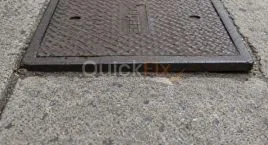
Water shutoff valves, cellar doors, and utility covers that sit proud of or below the surrounding concrete, adjusted flush to meet code.
Hoses, wires, and cables left running across a walking path are addressed and, where our scope allows, properly covered or rerouted.
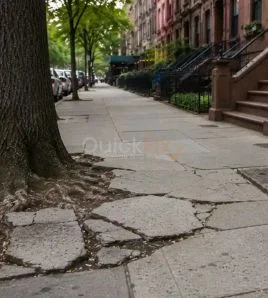
Sections lifted by tree roots are repaired or replaced while coordinating with NYC Parks so the tree itself isn't damaged.
Full violation removal service including permit filing, code-compliant repair, inspection scheduling, and sign-off with the DOT.


Under NYC Administrative Code §7-210, the property owner is legally responsible for keeping the sidewalk in front of their building free of hazards. A ½ inch lip between two slabs is enough to meet the DOT's technical definition of a substantial defect, and it's also enough to cause a real fall. If someone is injured on your sidewalk, you can be on the hook for medical bills and a liability claim that runs well into the tens of thousands of dollars, on top of any DOT fines or violation orders tied to the same defect.
QuickFix Sidewalk NYC has spent 30+ years fixing exactly this kind of damage for property owners across the Bronx, Brooklyn, Manhattan, and Queens. We inspect the full sidewalk frontage, not just the spot you called about, because a single raised flag is rarely the only issue, and we handle grinding, leveling, slab replacement, and permit paperwork so you don't have to chase any of it down yourself. If you've been searching for how to repair a sidewalk trip hazard or how to repair an uneven sidewalk the right way, the short answer is get a proper inspection first since a lip that looks minor can point to a bigger subgrade problem underneath.
Authorized by NYC DOB, DOT, DCA, NYC Parks, and OSHA. We know the rules and follow them.


Transparent, competitive pricing. No hidden costs. Every estimate includes a free site evaluation, permit filings, and a DOT approval guarantee. Uneven sidewalk repair cost varies by method, from a quick grind on a single lip to a full slab replacement:
A Simple, Hassle-Free Process from Inspection to DOT Approval
Send us photos of the raised, cracked, or sunken sidewalk section or your DOT violation notice, or schedule a free on-site inspection. We'll assess the hazard and provide a written estimate within 24 hours.
Minor lips can often be ground down in a single visit with no permit required. To repair concrete sidewalk's uneven sections, we put together a full repair or slab replacement plan, file the permits, and schedule a work date.
Once the work is done, we coordinate the DOT inspection where required and manage the process through final approval so the hazard is officially cleared from your record.
No obligation. Written quote within 24 hours. Sign online from your phone or computer.
We provide reliable, DOT-compliant trip hazard repair for properties throughout the Bronx, Manhattan, Brooklyn, and Queens.
Trip hazard grinding, slab leveling, and DOT violation removal for homes and businesses.
Raised slab and uneven sidewalk repair for storefronts, brownstones, and apartment buildings.
Trip hazard removal for office buildings, retail frontages, and residential properties.
Sidewalk lip grinding, slab repair, and violation removal for homes and businesses.
The NYC Department of Transportation treats a vertical height difference of half an inch or more between two adjacent sidewalk flags as a substantial defect and trip hazard. Cracked concrete, sunken panels, loose grates, and hardware that isn't flush with the sidewalk can also qualify.
Under NYC Administrative Code §7-210, the property owner is responsible for maintaining and repairing the sidewalk in front of their building, including removing trip hazards, regardless of who caused the damage.
Yes. Many minor lips and raised edges under a certain height can be ground down flush in a single visit at a fraction of the cost of a full slab replacement. Our inspection will tell you which approach your sidewalk needs.
Grinding a minor lip typically runs $6–$9 per sq. ft., while full repair work runs $18–$25 per square foot, and full slab replacement runs $1,700–$2,500 per slab. Final cost depends on the extent of the damage and site conditions.
Start with a proper inspection to measure the height difference and check what's happening below the surface, tree root pressure, poor drainage, or a settling subgrade can all cause the same visible lip. From there, minor edges get ground flush, while larger raised, sunken, or cracked sections get repaired or replaced and filed with the DOT as needed.
Grinding a single uneven joint runs $6–$9, while a full uneven sidewalk repair covering a larger cracked or sunken section runs $18–$25 per square foot, and a complete slab replacement runs $9,000–$12,500 per slab. We'll tell you which option actually fits your sidewalk after the free inspection, not before.
You get a set window, generally 75 days, to correct the violation. Miss it, and the city can perform the repair itself and bill you at roughly three times the normal cost, on top of any fines already issued.
Yes. We are DOT-licensed, OSHA-certified, and authorized by NYC DOB, DCA, and NYC Parks, with full general liability and workers' compensation insurance to perform code-compliant trip hazard repair and violation removal.
Real results from real customers across Manhattan, Brooklyn, Queens, and the Bronx.
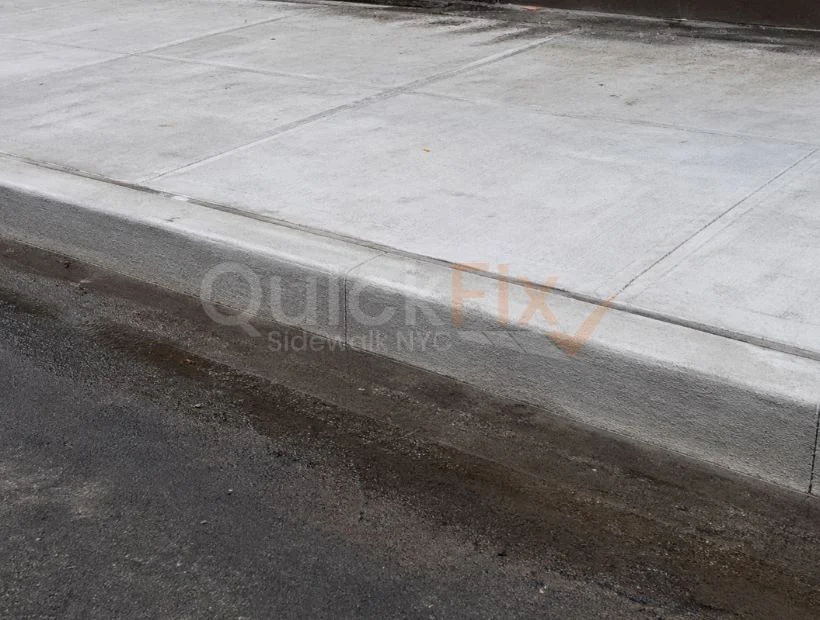
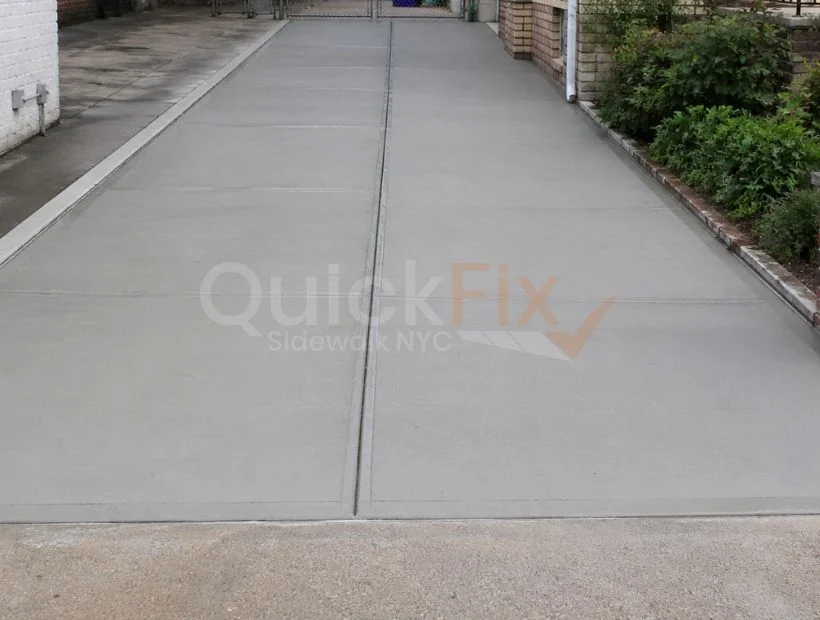
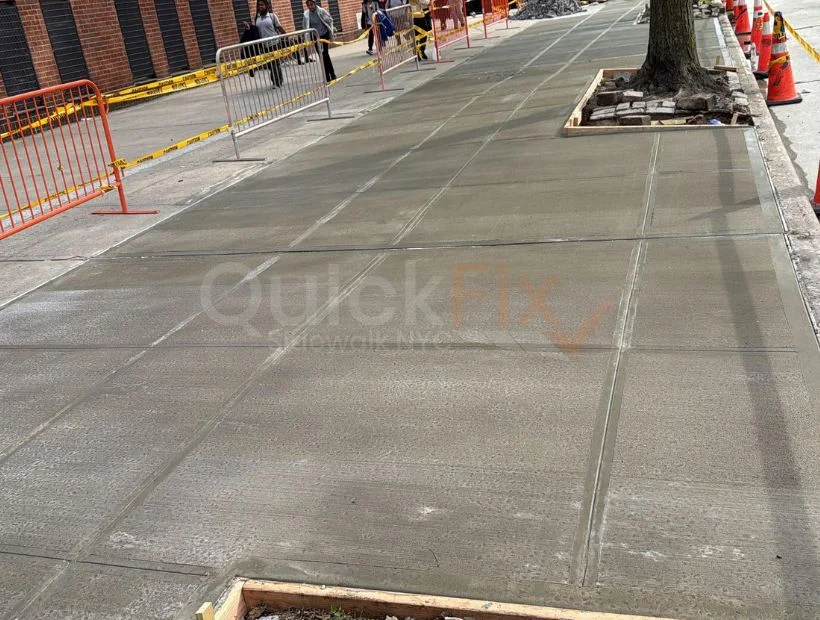
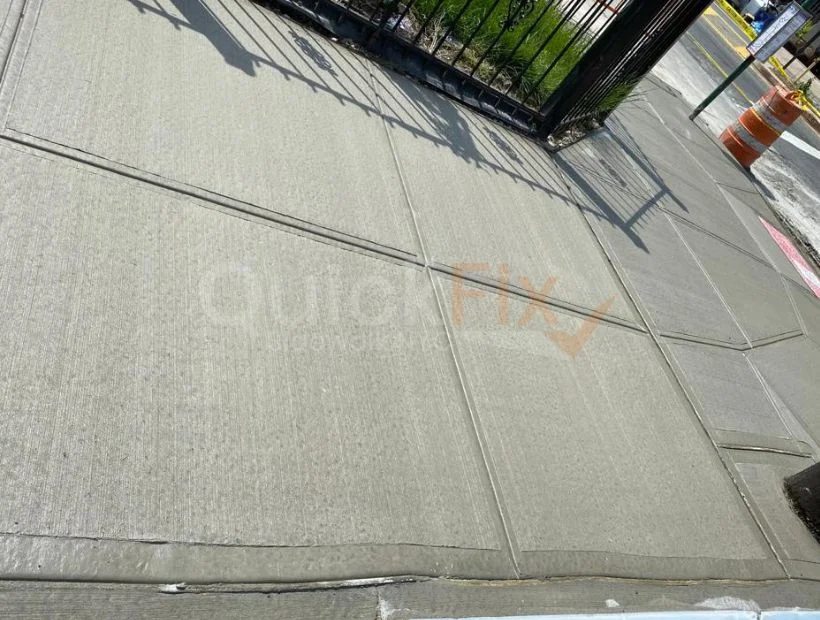
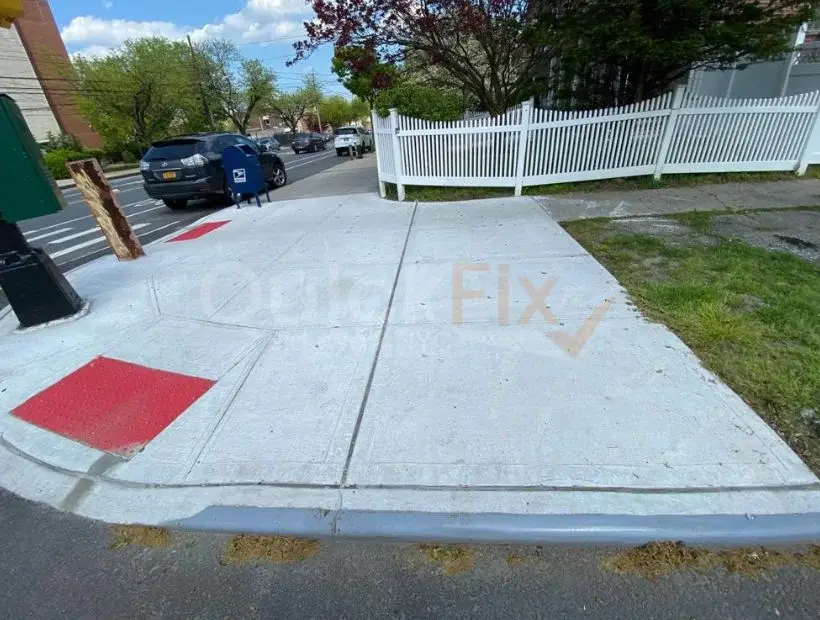
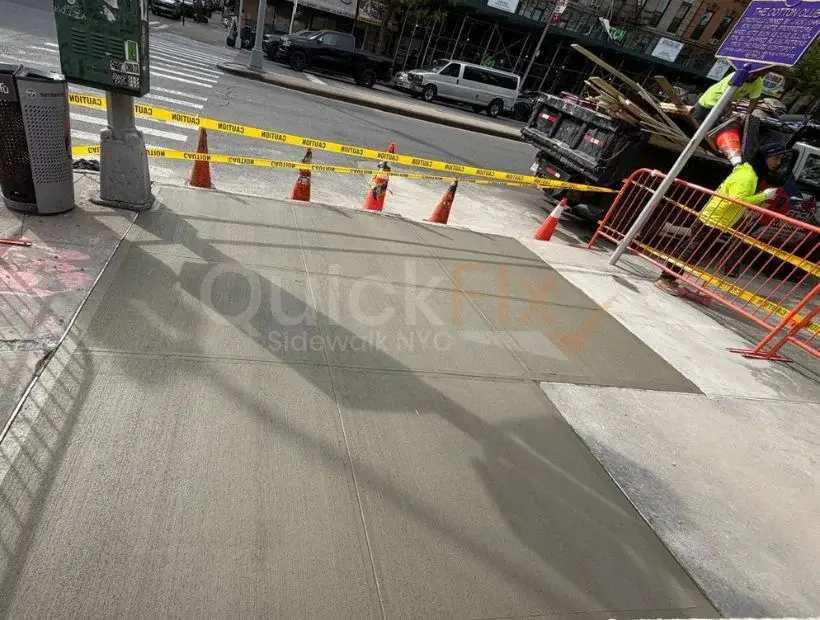
Take a look at our recent projects, including sidewalk repair, driveway repair, concrete curb work, and landmark sidewalk restoration.
No obligation. Written quote within 24 hours. Sign online from your phone or computer.