Project Snapshot
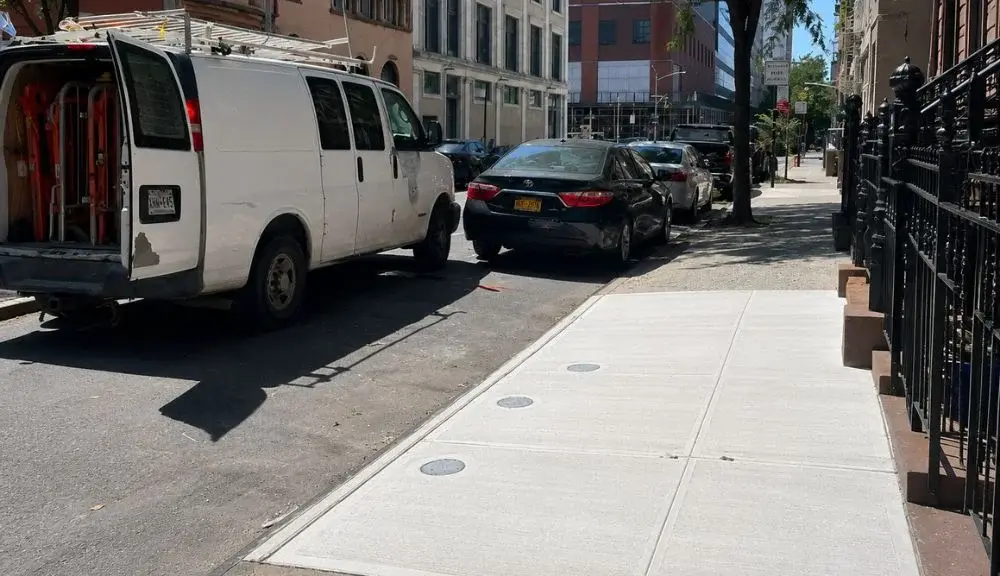
- Location: 67 W 126th St, Manhattan NY 10027, USA
- Property type: Historic mixed-use residential property
- Issue: DOT violation / slab failure due to heavy foot traffic and weather
- Scope: 8 flags / 200sq ft
- Permit(s): Sidewalk permits, 811 Utility Mark-out Ticket, LPC permit
- Estimated cost: $5040+$140=$5180
- Timeline: Approximately two days on-site and 60 days for official violation clearance
- How they found us: Google search
How This Customer Found Us
The property owner at 67 W 126th St found us through a Google search after noticing a DOT violation notice tied to the deteriorating sidewalk fronting the building. Sitting in the heart of Central Harlem, just west of Fifth Avenue, the property gets steady foot traffic from residents, local business patrons, and commuters passing through daily. After reviewing our track record on historic-district sidewalk projects, the owner reached out for an estimate and brought us on to manage the repair from permitting through final inspection.
The Problem
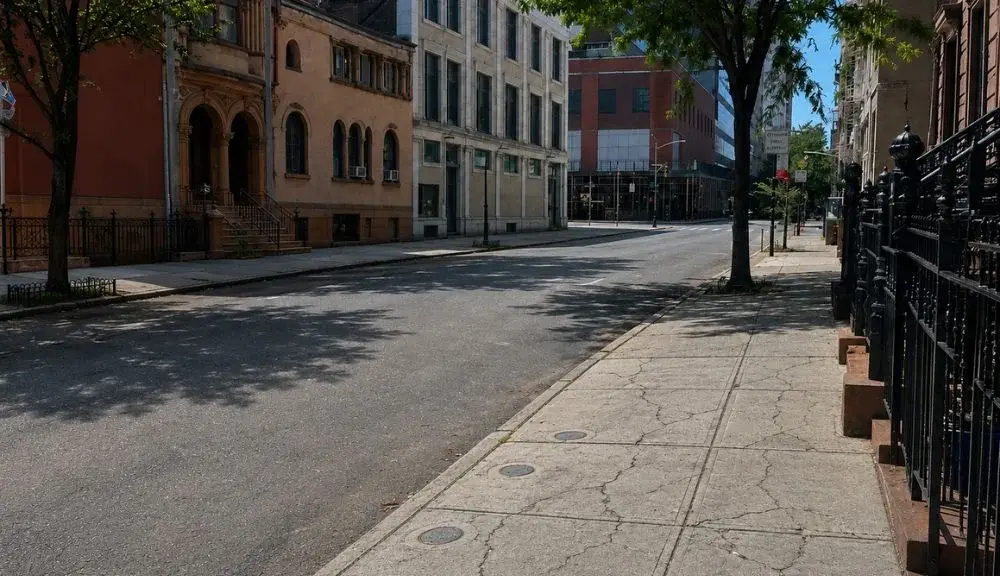
The sidewalk fronting this mixed-use Harlem property had been worn down by years of constant pedestrian traffic combined with seasonal freeze-thaw cycles and general weather exposure. What started as surface cracking had progressed into deep, diagonal fractures running more than three inches wide across several slabs, a pattern closely resembling alligator cracking. Because the block sees heavy daily foot traffic from residents, shoppers, and commuters, the failing slabs had become a serious trip hazard.
As with any sidewalk fronting a private property in NYC, NYC Administrative Code §19-152 places responsibility for safe sidewalk conditions on the property owner. This property carried an added layer of complexity, since it falls within the Central Harlem Historic District, meaning any exterior work visible from the street, sidewalk replacement included, needed Landmarks Preservation Commission sign-off on top of standard DOT construction rules and ADA accessibility standards.
Unlike surface-level cracking that can often be patched, our assessment confirmed this damage had compromised the structural integrity of the slabs themselves. Simple resurfacing wouldn't hold up under the block's foot traffic, so the affected sections needed full replacement rather than repair.
Site Assessment
Our inspection confirmed the cracking wasn't isolated to a few weak spots but ran consistently across eight slabs, totaling roughly 200 square feet of frontage. The diagonal, alligator-style fracture pattern indicated the concrete had broken down at the base level, not just the surface, which ruled out a patch-and-seal approach.
Because the property sits within a historic district, we also had to account for how the finished sidewalk would look, not just how it would perform. Fortunately, the existing sidewalk had been built using standard NYC concrete, which meant the replacement material was already an approved match for the historic streetscape and didn't require special sourcing or custom specifications for LPC sign-off.
Execution
Every historic-district sidewalk project adds a layer on top of the usual three stages: assess and price, secure approvals, then execute. Here's how each stage played out at 67 W 126th St.
Day 0–1: Inspection and Estimate
Our team walked the frontage and traced the cracking pattern across all eight affected slabs, confirming the damage was structural and required full replacement. Since standard concrete was already an approved material for this historic block, the estimate didn't need to account for custom material sourcing, keeping the scope straightforward despite the historic designation.
Day 3–18: Permits and LPC Review
Before any work could begin, our team filed for three approvals:
- Sidewalk Construction Permit: the baseline DOT authorization required for the replacement
- LPC Permit: required because the property sits within the Central Harlem Historic District, and any exterior alteration visible from the street, sidewalks included, needs Landmark's sign-off
- 811 Utility Mark-Out Ticket: submitted ahead of excavation to identify buried utility lines
The LPC review moved quickly since the sidewalk was already built with standard NYC concrete, an approved material for the district. With no custom scoring pattern or dimension matching required, approval came through without revisions, and the remaining permits were processed in parallel.
Day 18–20: The Replacement Itself
With every approval in hand, our crew moved efficiently through the physical work:
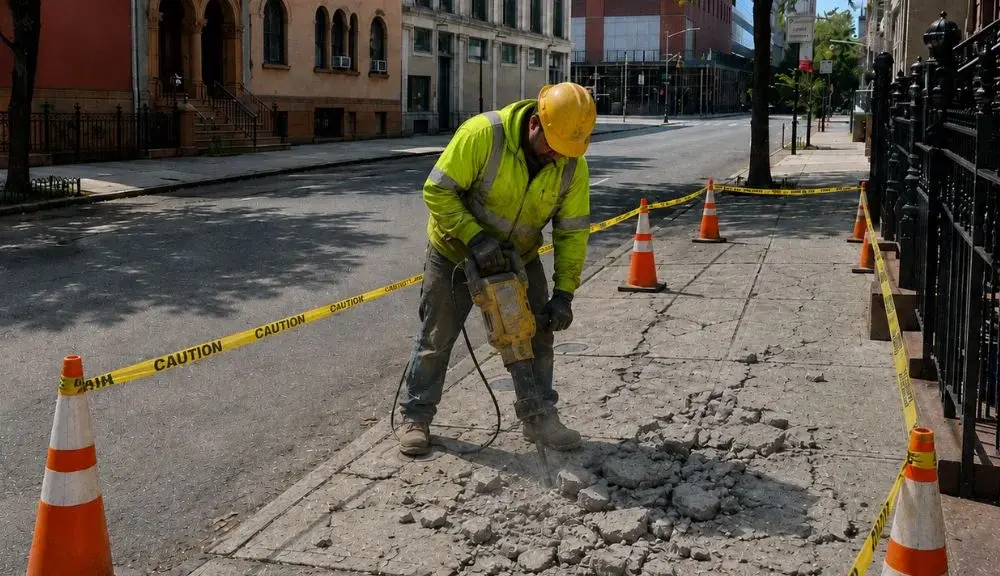
- Demolition: All eight damaged slabs across the 200-square-foot frontage were broken out and removed, clearing the structurally compromised concrete down to the base.
- Base preparation: The subgrade was regraded and compacted to a 6-inch base, providing a stable, level foundation for the new slabs.
- Concrete pour: New slabs were poured using DOT-compliant, 4-inch-thick, 4,000 PSI concrete, matching the standard finish already used throughout the historic block.
- Finishing and cure time: Slabs were finished to grade and allowed to cure fully before reopening the sidewalk to pedestrian traffic.
Throughout the project, the crew maintained a safe pedestrian path around the work zone, since the block sees regular foot traffic from residents, shoppers, and commuters moving through Central Harlem.
Day 20–45: Final Inspection and Compliance
Once the new slabs cured, we coordinated the final DOT inspection on the owner's behalf. Our team stayed engaged through the inspection process, ready to address any adjustments at no additional cost if DOT had requested them. The replacement passed inspection on the first attempt, bringing the property into full compliance with DOT standards and LPC preservation requirements, closing out the violation without further city involvement.
Cost Breakdown
- Sidewalk Construction Permit: $70
- Sidewalk Closing Permit: $70
- 811 Ticket: Free
- LPC Permit: Free
- Construction (200 sq. ft.): $5040
- Total: $5180
Results
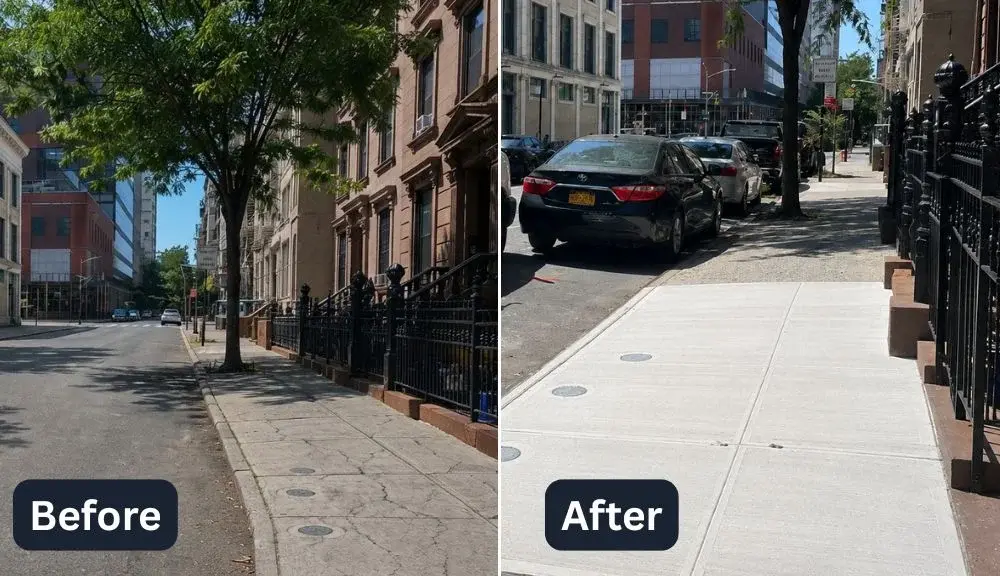
All eight structurally compromised slabs across the 200-square-foot frontage were replaced, eliminating the trip hazard created by deep alligator-style and diagonal cracking while satisfying LPC's requirements for preserving the historic streetscape. The new ADA-compliant walkway resolves the underlying structural failure at the original crack points, rather than masking it with a surface patch that wouldn't have held up under the block's daily foot traffic.
Client Testimonial
"I found them through a quick Google search after getting the violation notice and honestly didn't expect the historic district part to go so smoothly. They handled the LPC approval without any back and forth and got the whole sidewalk replaced in two days. Passed inspection the first time, no surprises."
(Property Owner, Central Harlem, Manhattan)
Why Central Harlem Homeowners Choose Us
Central Harlem's historic blocks combine heavy daily foot traffic with Landmarks Preservation Commission oversight that governs how sidewalk work can look. We've built our permitting process around handling both at once, so property owners aren't stuck coordinating between DOT and LPC on their own. That means fewer delays, fewer resubmissions, and a sidewalk that satisfies the city while fitting the character of the block.