Project Snapshot
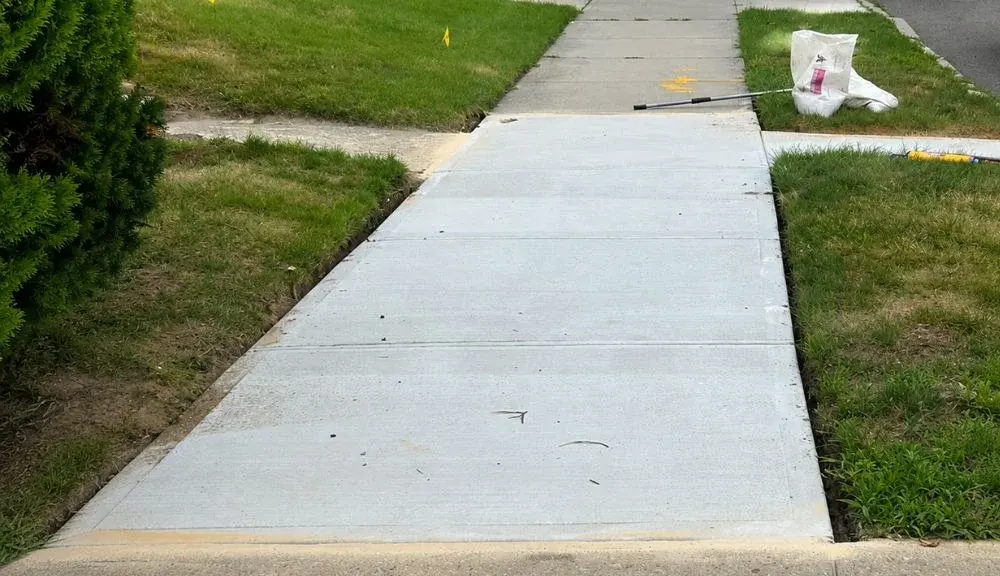
- Location: 69-03 226th St, Flushing, NY 11364
- Property type: Residential Property at Corner Lot
- Issue: DOT violation / slab failure due to heavy foot traffic and weather
- Scope: 12 flags / 300 sq ft along with driveway apron and curb cut
- Permit(s): Sidewalk permits, 811 Utility Mark-out Ticket, Curb cut permit
- Estimated cost: $5440+$140+$135=$5715
- Timeline: Approximately two days on-site and 60 days for official violation clearance
- How they found us: Referral from a previous client
How This Customer Found Us
The homeowner at 69-03 226th St. came to us on a referral from a past client in the neighborhood after getting a DOT violation notice for the sidewalk wrapping their corner lot. Sitting at the intersection of 226th Street and 69th Avenue in Oakland Gardens, the property faces sidewalk frontage on two sides instead of one, which meant more concrete to inspect, more slabs to account for, and a wider scope than most single-frontage repairs in the area. After hearing how smoothly the referring neighbor's project went, the owner reached out for a quote and brought us on for the full scope, from permitting through final inspection.
The Problem
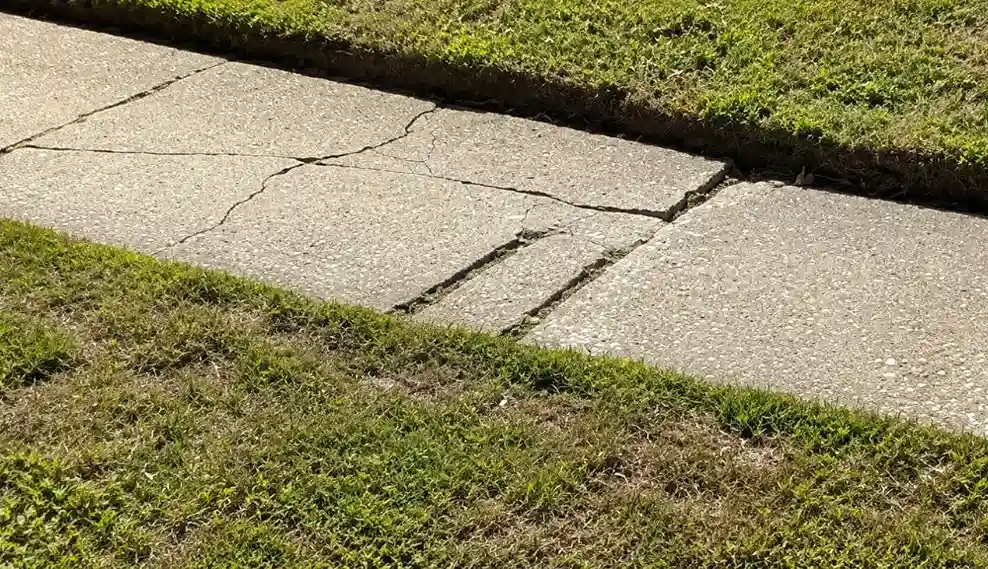
Corner properties take more punishment than mid-block lots simply because they have more exposed sidewalk. At 69-03 226th St., years of steady foot traffic combined with repeated freeze-thaw cycles had left multiple slabs cracked, sunken, and uneven along both street frontages. Some sections had settled low enough to create a noticeable lip between adjoining slabs, which is exactly the kind of height differential DOT inspectors flag as a trip hazard.
Beyond the sidewalk itself, the driveway apron and curb cut on the property had also degraded to the point where they no longer met current DOT standards, an issue that often goes hand-in-hand with sidewalk violations on corner lots where the apron ties directly into the failing frontage.
Under NYC Administrative Code §7-210, sidewalk maintenance and liability for injury sit with the property owner, not the city. On a corner lot, that responsibility simply covers more linear feet of concrete, which is part of why this project's scope ran larger than a standard single-frontage repair.
Site Assessment
Our team walked both street frontages and identified 12 damaged slabs totaling roughly 300 square feet, spread across the corner rather than concentrated in one section. The damage pattern was consistent with age and traffic wear rather than a single cause like root intrusion, which meant a full slab-by-slab replacement plan rather than a patch job.
Because the driveway apron and curb cut tied directly into the failing sidewalk sections, we scoped those into the same project rather than treating them as a separate job later. Replacing everything in one mobilization meant one permit cycle, one construction window, and one final inspection instead of two.
Execution
Corner-lot projects follow the same three stages as any sidewalk repair, just at a larger scale: assess and price, secure approvals, and then execute.
Day 0–1: Inspection and Estimate
Before breaking any concrete, we filed for the full set of approvals this scope required:
- Sidewalk Construction Permit: the standard DOT authorization for the slab replacement
- Sidewalk Closing Permit: needed to close the work zone to pedestrian traffic during construction
- Curb Cut Permit: required specifically because the driveway apron and curb cut were part of the scope
- 811 Utility Mark-Out Ticket: submitted ahead of excavation to flag buried utility lines along both frontages
With no historic district or landmark review to factor in, approvals moved through DOT's standard channel without added review layers.
Day 18–20: The Construction Itself
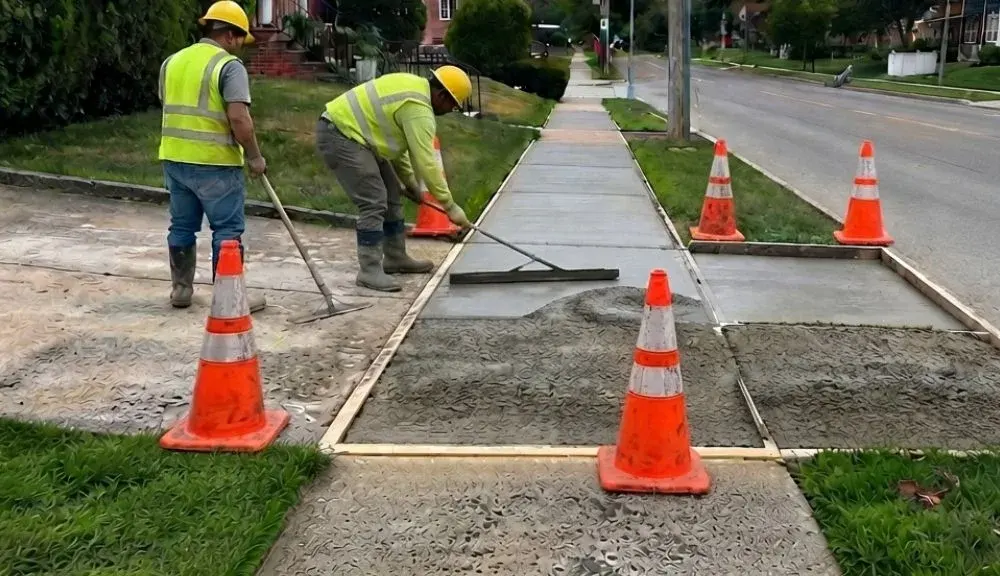
Once permits cleared, our crew worked through the corner lot in a single two-day mobilization:
- Demolition: All 12 damaged slabs across both frontages were broken out and removed, along with the deteriorated driveway apron and curb cut.
- Base preparation: The subgrade along both streets was regraded and compacted to provide a level, stable base for the new concrete.
- Concrete pour: New slabs were poured at DOT's required thickness, with expansion joints placed to allow for proper drainage and to reduce future cracking from seasonal ground movement.
- Apron and curb cut rebuild: The driveway apron and curb cut were poured to current DOT specifications, restoring safe, code-compliant vehicle access.
- Finishing and cure: All sections were finished to grade and left to cure before reopening to foot and vehicle traffic.
Because the property sits on a corner, our crew maintained safe pedestrian routes along both sidewalks throughout construction rather than closing off a single stretch.
Day 23–45: Final Inspection and Compliance
Once the concrete cured, we coordinated the DOT inspection on the homeowner's behalf. The completed work, sidewalk, apron, and curb cut, passed on the first visit, clearing the violation and bringing the full corner frontage into DOT compliance.
Cost Breakdown
- Sidewalk Construction Permit: $70
- Sidewalk Closing Permit: $70
- Tree Work Permit: Free
- 811 Ticket: Free
- Curb repair permit: $135
- Construction (300 sq. ft. + curb cut & apron): $5440
- Total: $5715
Results
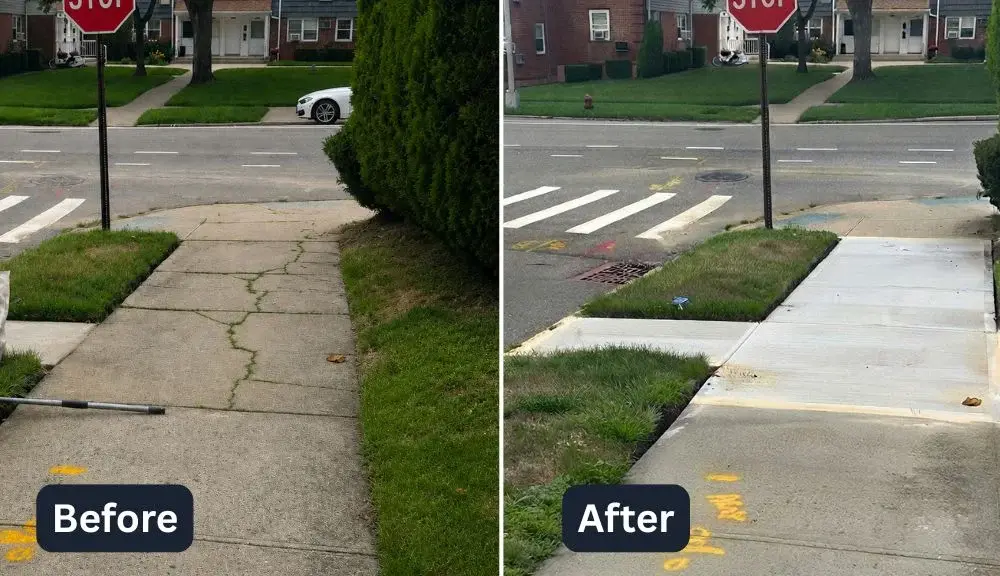
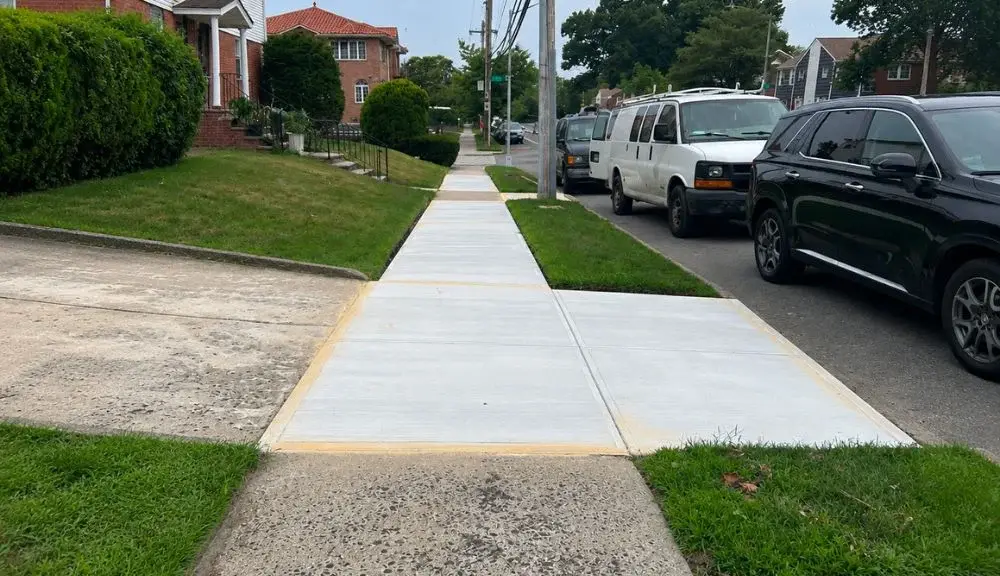
All 12 damaged slabs across the corner's 300 square feet of frontage were replaced, along with a rebuilt driveway apron and curb cut, eliminating the trip hazards created by settling and uneven concrete. The finished sidewalk and apron now meet current DOT standards along both street faces, and the violation was cleared without a second inspection.
Client Testimonial
"My neighbor had used them for their sidewalk and told me to call before I even got the violation letter. Since we're on a corner, I figured it'd be a bigger headache, but they handled the permits for the sidewalk, the apron, and the curb cut all together. Two days of work and it passed inspection right away."
(Property Owner, Oakland Gardens, Queens)
Why Oakland Gardens Homeowners Choose Us
Corner properties in neighborhoods like Oakland Gardens carry more sidewalk frontage, and often a driveway apron or curb cut tied into it, which means violations here tend to cover more ground than a typical mid-block repair. We scope corner lots as a single project rather than piecing it out, so homeowners get one permit cycle, one construction window, and one inspection instead of juggling separate jobs for the sidewalk and the driveway.