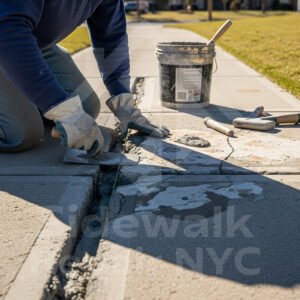
 Here’s where a little effort goes a long way. Small cracks might not bother you today, but give them one winter, and they’ll widen like crazy.
Think of crack repair like patching a roof leak; ignoring it can make the problem multiply. Fixing cracks while they are small is always cheaper and easier than waiting until you’re forced into a full replacement.
In many neighborhoods, tree roots are the real culprits. They snake under sidewalks, lift the slabs, and create gaps where water pools.
You can’t just cut roots without risking the tree, but you can manage the situation. Here is how:
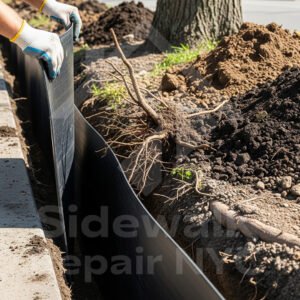
Root barriers act like underground shields. Installed alongside sidewalks, they guide roots downward or away from the concrete, reducing the chances of slabs being lifted. These barriers are typically made of plastic or specialized fabric and can be installed when planting a tree or retrofitted later. While they won’t stop root growth entirely, they can significantly reduce conflict between your sidewalk and the tree.
Cutting tree roots is trickier than it looks. A poorly placed cut can destabilize the tree, make it more vulnerable to disease, or even kill it. That’s why calling in certified arborists is crucial. They know how to trim the right roots without causing harm, often following the “25% rule,” which means never removing more than a quarter of the root system. They deeply evaluate which roots are safe to trim, recommend alternatives when needed, and protect the tree’s long-term health while keeping your sidewalk in check.
Sometimes, even with the best efforts, roots and sidewalks will clash. In these cases, switching materials can help. Some of the materials include:
These alternatives move with the roots rather than against them, reducing the chances of cracks or raised slabs. They also help rainwater soak back into the soil, supporting trees and reducing excess runoff in the street.
That said, not every city allows alternative materials, so it’s important to check local ordinances first. For instance, in New York City, concrete remains the required standard for sidewalks. You can’t install pavers or other materials unless your property is located in a designated historic district, and even then, the Landmarks Preservation Commission and PDC must review and approve the design under strict guidelines. If permitted where you live, though, this flexible approach lets your sidewalk adapt to natural growth instead of constantly fighting against it.
 Instead of being caused by one heavy storm, water damage is usually the result of a year-round cycle. Staying proactive with seasonal maintenance helps keep sidewalks strong and safe. For any cracks or uneven areas, consider sidewalk specialists who make repairs easier and ensure your sidewalk stays in top shape with regular care.
Fallen leaves and twigs might seem harmless, but when they pile up, they trap moisture and block water from draining off your sidewalk. That standing water can seep into hairline cracks and set the stage for expensive damage due to the freeze-thaw cycle.
A quick sweep every week or two in autumn makes a huge difference, especially before big storms. Think of it as prepping your sidewalk the same way you rake your yard.
Rock salt might melt ice fast, but it’s brutal on concrete. It seeps into the pores, corrodes the surface, and accelerates cracking. Instead, consider other deicing chemicals like calcium chloride: it’s gentler on concrete and still effective at melting snow and ice.
Plus, it works well at lower temperatures, so you’ll spend less time worrying about slippery surfaces. If you want to go the extra mile, sprinkle sand for added traction without stressing the concrete at all.
Once the ice is gone, spring is the perfect time for a checkup. Walk your sidewalk slowly and look for new cracks or widened gaps that winter may have left behind. Even hairline cracks can expand quickly if ignored.
A small repair now, whether with crack filler or mortar, can save you from bigger headaches later. Spring is also a good time to reseal your sidewalk if water no longer beads on the surface.
Summer heat doesn’t just make sidewalks hot to the touch; it also causes the concrete to expand. If your sidewalk already has weak spots, that extra pressure can widen cracks or push slabs upward.
Keeping an eye on vulnerable sections during summer helps you catch problems early. This is also a good season for preventative work, whether it’s sealing the surface, repairing cracks, or even replacing a damaged section, since the warm, dry conditions are ideal for concrete repairs.