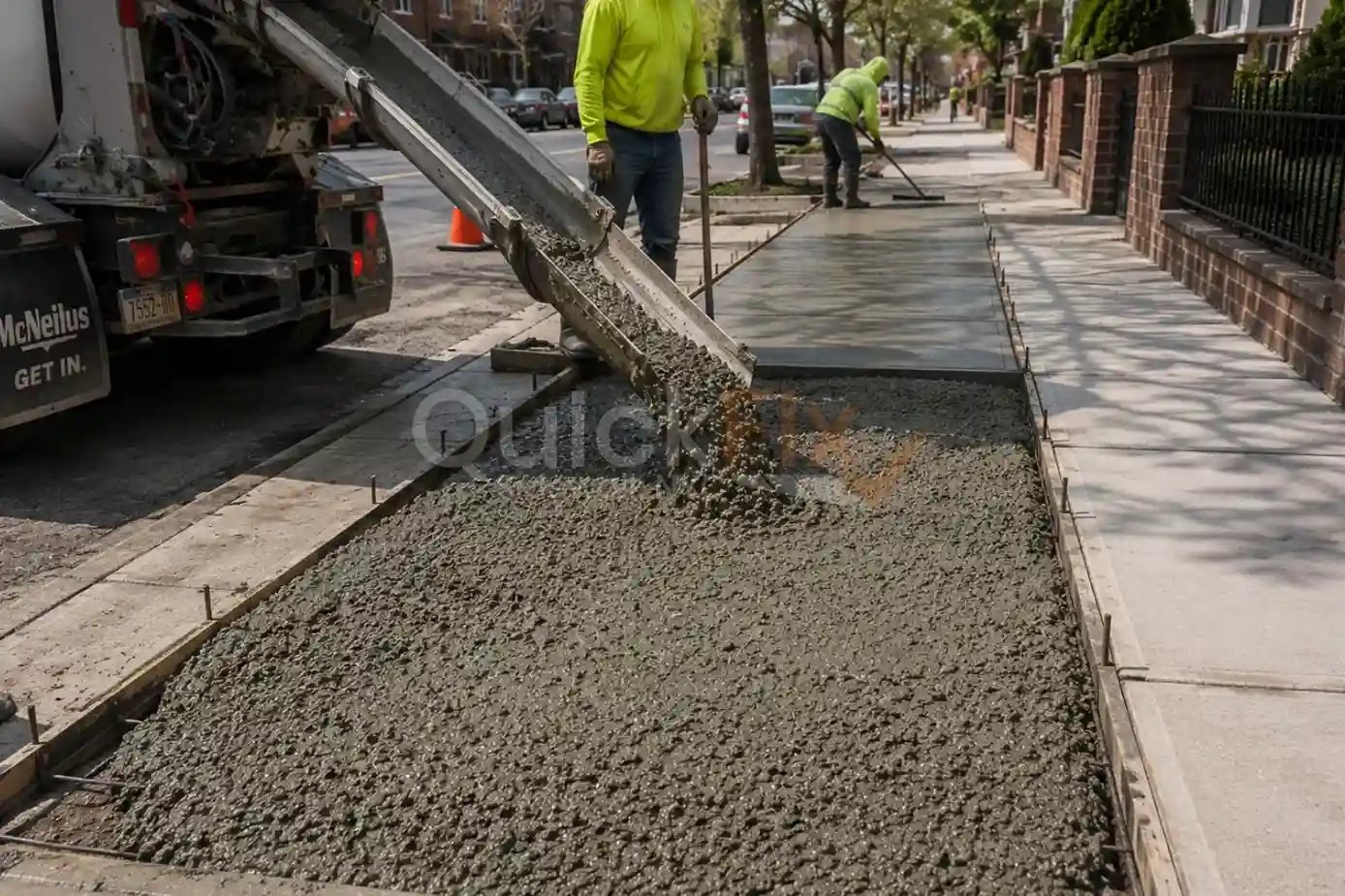
If you ignore a sidewalk violation in New York City for 75 days, the Department of Transportation (DOT) can send its own contractor to fix the sidewalk in front of your property, and the Department of Finance (DOF) will bill you for the work. If that bill looks wrong, you can dispute it, but only by following a set of steps in a specific order. Here is how the process runs, from the first notice to the final appeal.
What "Repair and Bill" Actually Means
Officially, the city describes this as repairs performed by NYC DOT. The legal footing is Section 19-152 of the Administrative Code, which makes property owners responsible for installing, repairing, and maintaining the sidewalk next to their property. When an owner does not act, the city does the work and sends the invoice.
The Expedited Sidewalk Repair Program once let owners ask DOT to fix a defect and bill them afterward. DOT now lists that program as on pause until further notice, and NYC311 states that the City does not accept requests to repair your sidewalk. These days, the repair-and-bill route only kicks in after a violation goes unresolved.
How the Process Works, Step by Step
The Notice of Sidewalk Violation
It starts when a DOT inspector flags a defect, such as a trip hazard, a cracked or missing flag, an improper slope, or a gap under the concrete. The notice comes with a Preliminary Inspection Report, a sketch that numbers every sidewalk flag marked for replacement. There is no fine attached, but a copy is filed with the County Clerk, and it can complicate selling or refinancing your property.
You get 75 days to make repairs. The clock starts on the date shown on the certified mail receipt or, if the notice was posted on the property, on the posting date. A sidewalk permit does not extend that window.
The City Sends a Contractor
Once the 75 days pass, DOT may do the work itself or hire a contractor. You should receive formal notice before the crew arrives. A city representative photographs the sidewalk, marks the flags to be replaced, and then the repair begins. In winter, cold weather will most likely delay the work. The city also will not repair a sidewalk over a vault, so that job stays with the owner.
The Bill from the Department of Finance
After the work is finished, DOF sends the bill and DOT notifies the County Clerk's Office to remove the violation. You have 90 days to pay before interest starts. After that, interest accrues and a monetary lien is placed against the property.
How the City Calculates Your Cost
The math is already in your paperwork. Multiply the square footage on the Preliminary Inspection Report by the per-square-foot price listed in the letter that came with your violation. Driveway areas use the 7-inch concrete price, and everything else uses the 4-inch price. The final bill may include extra repairs needed to remove all defects, so it can land above your estimate.
If a flag on the sketch is marked with an X, the city may replace it at no charge. An engineer from the Department of Design and Construction (DDC) makes that call at construction time.
Ways to Lower or Avoid the Bill
A few options are worth knowing about.
-
Hire a private contractor first. Sidewalk work costing more than $200 requires a Home Improvement Contractor License from the Department of Consumer and Worker Protection, and you can check a license online. The permit runs $70 for every 300 linear feet. Once the job is done, request a dismissal inspection through 311.
-
Check for tree damage. The city no longer issues violations or liens on one-, two-, and three-family properties when the damage was caused only by City trees, and it does not charge those owners for the repair.
-
Ask about a payment plan. Under DOF's installment program, you can split a charge into four installments if you apply within one year of the charge being entered, the charge is more than $250 but no more than $5,000, and the property is a one- to six-family home or has an assessed value of $30,000 or less. Interest is 8.5 percent a year or the City's borrowing rate, whichever is lower, and a missed payment can make the full balance due.
-
Look at who caused the damage. If a utility company or another contractor broke the sidewalk, document it and file a claim with that company.
How to Dispute the Charges
Here is the part that trips people up. DOF only collects the money, and it cannot change what other agencies charge, so a complaint about the amount has to go to the agency that handled the work. DOT says the steps below must be followed in the exact order shown.
Start with the Violation Itself.
If the defects on your report do not exist, you can appeal through NYC311 within 75 days of receiving the notice. Compare the report against your lot's width, trees, utility caps, and cellar doors. DOT schedules a reinspection within 180 days, and a different inspector who has not seen the first report does the work. That result is final. If the violation went to the wrong owner, mail DOF's Correspondence Unit at 66 John Street, 3rd Floor, New York, NY 10038, to update the ownership record.
Appeal the bill to DDC
If you are unhappy with the quality of the work, the amount of work performed, or the accuracy of the measurements behind your bill, contact a DDC borough office through 311 or DDC's website. Phone calls and personal visits are not considered appeals. Photos, your inspection report, and the bill make your case stronger. If the city's contractor damaged the sidewalk through its own negligence, it must repair that damage at no cost.
File a Notice of Claim with the Comptroller
If DDC's answer does not settle things, file a notice of claim with the Comptroller's Office. It must be filed within one year from the date you were billed,.
Petition the Court
If the Comptroller does not find in your favor, you can file a Petition of Appeal in the Small Claims Assessment Review Part of New York State Supreme Court. You must state that at least 30 days have passed since the claim was presented and that the Comptroller either did not decide or denied it. For a large bill, consider talking to an attorney, since this article is general information, not legal advice.
Fix Your Sidewalk Before the City Does
If you have received an NYC sidewalk violation, you don't have to wait for the city to arrange the repair and send you the bill. We can inspect the affected sidewalk, explain the required repairs, and provide an estimate so you can address the violation before the deadline. Contact us today to discuss your sidewalk violation and repair options with our licensed experts.